Jennifer Maiden

Jennifer Maiden (born 7 April 1949) is an Australian poet. She was born in Penrith, New South Wales, and has had thirty-two books published: twenty-five poetry collections, six novels and one nonfiction work. She began writing professionally in the late 1960s and has been active in Sydney's literary scene since then. She received a Bachelor of Arts majoring in English Literature at Macquarie University in the early 1970s. She has one daughter, Katharine Margot Toohey, the founder of Quemar Press. Aside from writing, Jennifer Maiden has run writers workshops with a variety of literary, university, community and educational organizations, and has devised and co-written (with Margaret Cunningham Bennett, who was then the director of the New South Wales Torture and Trauma Rehabilitation Service) a manual of questions to facilitate writing by Torture and Trauma Victims. Later, Maiden and Bennett used the questions they had created as a basis for a clinically planned workbook published by Quemar Press.
Apart from her literary work, her artwork has appeared on some of her book covers, including The Winter Baby, Acoustic Shadow, The Trust, and several Quemar Press titles.
Among Jennifer Maiden's many literary awards are three Kenneth Slessor Prizes for Poetry, two C. J. Dennis Prizes for Poetry, the overall Victorian Prize for Literature, the Harri Jones Memorial Prize, the H.M. Butterly-F.Earle Hooper Award (University of Sydney), the Grenfell Henry Lawson Festival Prize, the FAW Christopher Brennan Award for lifetime achievement in poetry, two The Melbourne Age Poetry Book of the Year awards, the overall Melbourne Age Book of the Year and the ALS Gold Medal. She has had residencies at the Australian National University, the University of Western Sydney, Springwood High School and the New South Wales Torture and Trauma Rehabilitation Service. She has been awarded several Fellowships by the Australia Council. Her book, Liquid Nitrogen, was shortlisted for the Griffin International Poetry Prize.
In October 2011, the Australian magazine of politics, society and culture, The Monthly, listed her poetry collection, Friendly Fire (2005), as the poetry book in their selection of 20 Australian Masterpieces since 2000, when they asked 20 Australian art critics to identify "the most significant work of art in their field since 2000".
Her first UK collection, Intimate Geography, which is a selection from four of her Australian collections (Acoustic Shadow, Mines, Friendly Fire and Pirate Rain), was published by Bloodaxe Books in March, 2012.
Her second novel Play With Knives has been translated into German as Ein Messer im Haus (dtv, 1994).
A new, revised edition of her novel Play With Knives was published online as a free download by Quemar Press in 2016, followed by its previously unpublished sequel, Play With Knives: Two: Complicity.
In 2016, she wrote The Metronome, a collection that deals partly with the 2016 U.S. elections and includes their result in its epilogue. Because of topical relevance, Quemar Press uploaded its electronic edition on 9 November 2016. Giramondo published a print edition of The Metronome in March 2017.
Her fourth novel, Play With Knives: Three: George and Clare and the Grey Hat Hacker, was published online in December, 2016, as an exclusive from Quemar Press. It is a prose/verse sequel to Play With Knives, Play With Knives: Two: Complicity, and those of her poems which feature her characters George Jeffreys and Clare Collins.
Quemar released Appalachian Fall: Poems About Poverty in Power, a collection of Maiden's new poems in 2018, as the first Quemar Press paperback title.
In January 2018, her novel, Play With Knives, was combined with its sequel, Play With Knives: Two: Complicity, in a paperback published by Quemar Press. This was the first time Play With Knives: Two: Complicity was published in print form.
Her up-to-date Selected Poems 1967-2018 was published by Quemar Press in February 2018.
Jennifer Maiden's recent novels in poetry and prose, Play With Knives: Three and Play With Knives: Four were published in single paperback book from Quemar Press in 2018.
The final novel in the Play With Knives Quintet, Play With Knives: Five: George and Clare, the Malachite and the Diamonds, an experimental novel in poetry and prose, was released by Quemar Press in September 2018.
Her collection, brookings: the noun: New Poems, was released in early 2019 by Quemar Press.
Following her work as Writer in Residence at the NSW Service for the Treatment and Rehabilitation of Torture and Trauma Survivors, Jennifer Maiden and the torture and trauma clinician, academic and researcher, Margaret Bennett collaborated for Quemar Press, on a workbook to assist torture or trauma survivors to write of their experiences. In 2019, Quemar published the workbook, entitled Workbook Questions: Writing of Torture, Trauma Experience.
The Espionage Act: New Poems, Quemar's most recent Jennifer Maiden collection, was published at the beginning of 2020. In December 2019, an advance copy was included in Fairfax Media's list of 'Books We Loved in 2019'.
Bibliography:
Poetry Collections:
Tactics. (UQP, 1974)
The Problem of Evil. (Prism, 1975)
The Occupying Forces. (Gargoyle, 1975)
Mortal Details. (Rigmarole, 1977)
Birthstones. (Angus & Robertson, 1978)
The Border Loss. (Angus & Robertson, 1979)
For The Left Hand. (South Head, 1981)
The Trust. (Black Lightning, 1988)
Bastille Day. (NLA, 1990)
Selected Poems of Jennifer Maiden. (Penguin, 1990)
The Winter Baby. (Angus & Robertson, 1990)
Acoustic Shadow. (Penguin, 1993)
Mines. (Paper Bark, 1999) ISBN 90-5704-046-8
Friendly Fire. (Giramondo, 2005) ISBN 1-920882-12-X
Pirate Rain. (Giramondo, 2009) ISBN 978-1-920882-59-4
Intimate Geography: Selected Poems 1991-2010. (Bloodaxe Books, 2012) ISBN 978-1-85224-926-7
Liquid Nitrogen. (Giramondo, 2012) ISBN 978-1-920882-99-0
The Violence of Waiting. (Vagabond Press, 2013)
Drones and Phantoms. (Giramondo, 2014) ISBN 978-1-922146-72-4
The Fox Petition. (Giramondo, 2015) ISBN 978-1-922146-94-6
The Metronome. (Electronic Edition: Quemar Press, 2016) ISBN 978-0-9954181-0-3 , (Print Edition: Giramondo, 2017) ISBN 978-1-925336-21-4 (pbk.)
Appalachian Fall: Poems About Poverty in Power. (Quemar Press, 2018) Print Edition ISBN 978-0-9954181-7-2, Electronic Edition ISBN 978-0-9954181-8-9
Selected Poems 1967-2018. (Quemar Press, 2018) Print Edition ISBN 978-0-6482342-0-3, Electronic Edition ISBN 978-0-6482342-1-0
brookings: the noun. (Quemar Press, 2019) Print Edition ISBN 978-0-6482342-7-2, Electronic Edition ISBN 978-0-6482342-8-9
The Espionage Act. (Quemar Press, 2020) Print Edition ISBN 978-0-6485552-2-3, Electronic Edition ISBN 978-0-6485552-3-0
Novels:
The Terms. (Hale & Iremonger, 1982)
Play With Knives. (Allen & Unwin, 1990. New Revised Electronic Edition: Quemar Press, 2016)
Play With Knives: Two: Complicity. (Quemar Press, 2016)
Play With Knives: Three: George and Clare and the Grey Hat Hacker. (Quemar Press, 2016) ISBN 978-0-9954181-2-7
Play With Knives: Four: George and Clare, the Baby and the Bikies. (Quemar Press, 2017) ISBN 978-0-9954181-5-8
Play With Knives & Play With Knives: Two: Complicity. (Quemar Press, 2018) ISBN 978-0-9954181-9-6 (Paperback)
Play With Knives: Three: George and Clare and the Grey Hat Hacker & Play With Knives: Four: George and Clare, the Baby and the Bikies. (Quemar Press, 2018) ISBN 978-0-6482342-2-7
Play With Knives: Five: George and Clare, the Malachite and the Diamonds. (Quemar Press, 2018) Print Edition ISBN 978-0-6482342-5-8, Electronic Edition ISBN 978-0-6482342-6-5
Non-Fiction:
Workbook Questions: Writing of Torture, Trauma Experience (Written in collaboration with Margaret Bennett). (Quemar Press, 2019) Print Edition ISBN 978-0-6485552-1-6
List of her awards:
ALS Gold Medal (2015), Victorian Prize for Literature (2014), The FAW Christopher Brennan Award, Three Kenneth Slessor Prizes for Poetry, Two C. J. Dennis Prizes for Poetry, The Melbourne Age Book of the Year, Two The Melbourne Age Poetry Book of the Year awards, The Harri Jones Memorial Prize, The H.M. Butterly-F.Earle Hooper Award (University of Sydney), The Grenfell Henry Lawson Festival Prize, Shortlisted for the Griffin International Poetry Prize.
(Adapted from Wikipedia)
___________________________________________________________________________________________________________________________
Apart from her literary work, her artwork has appeared on some of her book covers, including The Winter Baby, Acoustic Shadow, The Trust, and several Quemar Press titles.
Among Jennifer Maiden's many literary awards are three Kenneth Slessor Prizes for Poetry, two C. J. Dennis Prizes for Poetry, the overall Victorian Prize for Literature, the Harri Jones Memorial Prize, the H.M. Butterly-F.Earle Hooper Award (University of Sydney), the Grenfell Henry Lawson Festival Prize, the FAW Christopher Brennan Award for lifetime achievement in poetry, two The Melbourne Age Poetry Book of the Year awards, the overall Melbourne Age Book of the Year and the ALS Gold Medal. She has had residencies at the Australian National University, the University of Western Sydney, Springwood High School and the New South Wales Torture and Trauma Rehabilitation Service. She has been awarded several Fellowships by the Australia Council. Her book, Liquid Nitrogen, was shortlisted for the Griffin International Poetry Prize.
In October 2011, the Australian magazine of politics, society and culture, The Monthly, listed her poetry collection, Friendly Fire (2005), as the poetry book in their selection of 20 Australian Masterpieces since 2000, when they asked 20 Australian art critics to identify "the most significant work of art in their field since 2000".
Her first UK collection, Intimate Geography, which is a selection from four of her Australian collections (Acoustic Shadow, Mines, Friendly Fire and Pirate Rain), was published by Bloodaxe Books in March, 2012.
Her second novel Play With Knives has been translated into German as Ein Messer im Haus (dtv, 1994).
A new, revised edition of her novel Play With Knives was published online as a free download by Quemar Press in 2016, followed by its previously unpublished sequel, Play With Knives: Two: Complicity.
In 2016, she wrote The Metronome, a collection that deals partly with the 2016 U.S. elections and includes their result in its epilogue. Because of topical relevance, Quemar Press uploaded its electronic edition on 9 November 2016. Giramondo published a print edition of The Metronome in March 2017.
Her fourth novel, Play With Knives: Three: George and Clare and the Grey Hat Hacker, was published online in December, 2016, as an exclusive from Quemar Press. It is a prose/verse sequel to Play With Knives, Play With Knives: Two: Complicity, and those of her poems which feature her characters George Jeffreys and Clare Collins.
Quemar released Appalachian Fall: Poems About Poverty in Power, a collection of Maiden's new poems in 2018, as the first Quemar Press paperback title.
In January 2018, her novel, Play With Knives, was combined with its sequel, Play With Knives: Two: Complicity, in a paperback published by Quemar Press. This was the first time Play With Knives: Two: Complicity was published in print form.
Her up-to-date Selected Poems 1967-2018 was published by Quemar Press in February 2018.
Jennifer Maiden's recent novels in poetry and prose, Play With Knives: Three and Play With Knives: Four were published in single paperback book from Quemar Press in 2018.
The final novel in the Play With Knives Quintet, Play With Knives: Five: George and Clare, the Malachite and the Diamonds, an experimental novel in poetry and prose, was released by Quemar Press in September 2018.
Her collection, brookings: the noun: New Poems, was released in early 2019 by Quemar Press.
Following her work as Writer in Residence at the NSW Service for the Treatment and Rehabilitation of Torture and Trauma Survivors, Jennifer Maiden and the torture and trauma clinician, academic and researcher, Margaret Bennett collaborated for Quemar Press, on a workbook to assist torture or trauma survivors to write of their experiences. In 2019, Quemar published the workbook, entitled Workbook Questions: Writing of Torture, Trauma Experience.
The Espionage Act: New Poems, Quemar's most recent Jennifer Maiden collection, was published at the beginning of 2020. In December 2019, an advance copy was included in Fairfax Media's list of 'Books We Loved in 2019'.
Bibliography:
Poetry Collections:
Tactics. (UQP, 1974)
The Problem of Evil. (Prism, 1975)
The Occupying Forces. (Gargoyle, 1975)
Mortal Details. (Rigmarole, 1977)
Birthstones. (Angus & Robertson, 1978)
The Border Loss. (Angus & Robertson, 1979)
For The Left Hand. (South Head, 1981)
The Trust. (Black Lightning, 1988)
Bastille Day. (NLA, 1990)
Selected Poems of Jennifer Maiden. (Penguin, 1990)
The Winter Baby. (Angus & Robertson, 1990)
Acoustic Shadow. (Penguin, 1993)
Mines. (Paper Bark, 1999) ISBN 90-5704-046-8
Friendly Fire. (Giramondo, 2005) ISBN 1-920882-12-X
Pirate Rain. (Giramondo, 2009) ISBN 978-1-920882-59-4
Intimate Geography: Selected Poems 1991-2010. (Bloodaxe Books, 2012) ISBN 978-1-85224-926-7
Liquid Nitrogen. (Giramondo, 2012) ISBN 978-1-920882-99-0
The Violence of Waiting. (Vagabond Press, 2013)
Drones and Phantoms. (Giramondo, 2014) ISBN 978-1-922146-72-4
The Fox Petition. (Giramondo, 2015) ISBN 978-1-922146-94-6
The Metronome. (Electronic Edition: Quemar Press, 2016) ISBN 978-0-9954181-0-3 , (Print Edition: Giramondo, 2017) ISBN 978-1-925336-21-4 (pbk.)
Appalachian Fall: Poems About Poverty in Power. (Quemar Press, 2018) Print Edition ISBN 978-0-9954181-7-2, Electronic Edition ISBN 978-0-9954181-8-9
Selected Poems 1967-2018. (Quemar Press, 2018) Print Edition ISBN 978-0-6482342-0-3, Electronic Edition ISBN 978-0-6482342-1-0
brookings: the noun. (Quemar Press, 2019) Print Edition ISBN 978-0-6482342-7-2, Electronic Edition ISBN 978-0-6482342-8-9
The Espionage Act. (Quemar Press, 2020) Print Edition ISBN 978-0-6485552-2-3, Electronic Edition ISBN 978-0-6485552-3-0
Novels:
The Terms. (Hale & Iremonger, 1982)
Play With Knives. (Allen & Unwin, 1990. New Revised Electronic Edition: Quemar Press, 2016)
Play With Knives: Two: Complicity. (Quemar Press, 2016)
Play With Knives: Three: George and Clare and the Grey Hat Hacker. (Quemar Press, 2016) ISBN 978-0-9954181-2-7
Play With Knives: Four: George and Clare, the Baby and the Bikies. (Quemar Press, 2017) ISBN 978-0-9954181-5-8
Play With Knives & Play With Knives: Two: Complicity. (Quemar Press, 2018) ISBN 978-0-9954181-9-6 (Paperback)
Play With Knives: Three: George and Clare and the Grey Hat Hacker & Play With Knives: Four: George and Clare, the Baby and the Bikies. (Quemar Press, 2018) ISBN 978-0-6482342-2-7
Play With Knives: Five: George and Clare, the Malachite and the Diamonds. (Quemar Press, 2018) Print Edition ISBN 978-0-6482342-5-8, Electronic Edition ISBN 978-0-6482342-6-5
Non-Fiction:
Workbook Questions: Writing of Torture, Trauma Experience (Written in collaboration with Margaret Bennett). (Quemar Press, 2019) Print Edition ISBN 978-0-6485552-1-6
List of her awards:
ALS Gold Medal (2015), Victorian Prize for Literature (2014), The FAW Christopher Brennan Award, Three Kenneth Slessor Prizes for Poetry, Two C. J. Dennis Prizes for Poetry, The Melbourne Age Book of the Year, Two The Melbourne Age Poetry Book of the Year awards, The Harri Jones Memorial Prize, The H.M. Butterly-F.Earle Hooper Award (University of Sydney), The Grenfell Henry Lawson Festival Prize, Shortlisted for the Griffin International Poetry Prize.
(Adapted from Wikipedia)
___________________________________________________________________________________________________________________________
Marie de France
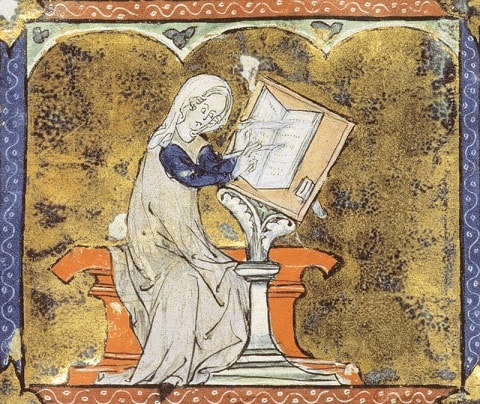
Marie de France is a twelfth century author and translator, considered to be the first female French poet. Her true name is unknown. The title Marie de France comes from a line of one of her works "Marie ai num, si sui de France" ("My name is Marie, and I am from France"). Passages from her work suggest she also lived in England. Scholars have suggested she was Marie, Abbess of Shaftesbury (Herny II’s half-sister), Marie I of Boulogne, Marie, Abbess of Barking, Marie de Meulan, or Marie, Abbess of Reading. She is the author of The Lais of Marie de France, a collection of twelve narrative-driven poems originating from Breton Lais. She is also thought to be the author of three other works. Quemar Press published new Modern English translations of her Romances Gugemer (in 2018), and Lanval (in 2019). Quemar will also publish a new translation of her Romance, Guildeluec and Guilliadon (aka Eliduc) in 2020.
__________________________________________________________________________________________________________________________________________
__________________________________________________________________________________________________________________________________________
Bernat Metge
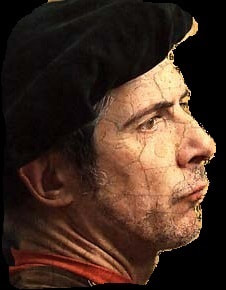
Born in Barcelona between 1340 and 1346, Bernat Metge was the son of Guillem Metge and his wife Agnes, who, when widowed, married Ferrer Sayol, chief clerk to the Queen Elionor (third wife of Pedro el Ceremonioso) and palace translator. Bernat perhaps received his education in the classics from his stepfather. In 1371, Bernat Metge was a court clerk to the Duke of Gerona, the future John I, having passed into his service after Queen Elionor’s death.
In 1388, he was imprisoned on charges of embezzlement but was released and rehabilitated.
in 1390, Metge advanced to the position of Royal Secretary to John I, and married Eulàlia Pormós (the daughter of a public official), with whom he had three daughters and a son.
In 1392-93, he was in Valencia. There he had a love affair with Violant Cardona, with whom he had a son, John, later legitimised. In 1395, the King trusted him with an ambassadorship near the pope, in Aviñón, where he met the master Fernández de Heredia. That year, he accompanied the King to Mallorca when the plague was declared in Barcelona.
After the sudden death of John I, the Queen Maria de Luna, wife of Martin I, acceded to power. Metge and other members of the Royal Council were accused of murdering King John and imprisoned in1397. Here, he wrote the satirical Medicina apropiada a tot mal and conceived his masterwork, Lo Sompni.
The work won him the favour of Marten I and he was released, becoming Chancellor of Marten’s Court from 1405 until Marten’s death in 1410. He eventually retired from palace circles.
Metge’s translations include Fournival and Petrarch, and his other works include the allegorical poem Llibre de Fortuna e Prudència (1381) and El Sermó feyt per en Bernat Metge. Lo Sompni reveals the influence of Dante and the Italian classics. In 2020, Quemar Press will publish a new, Modern English translation of Lo Sompni. The full Book One can be read on the Forthcoming page.
__________________________________________________________________________________________________________________________
In 1388, he was imprisoned on charges of embezzlement but was released and rehabilitated.
in 1390, Metge advanced to the position of Royal Secretary to John I, and married Eulàlia Pormós (the daughter of a public official), with whom he had three daughters and a son.
In 1392-93, he was in Valencia. There he had a love affair with Violant Cardona, with whom he had a son, John, later legitimised. In 1395, the King trusted him with an ambassadorship near the pope, in Aviñón, where he met the master Fernández de Heredia. That year, he accompanied the King to Mallorca when the plague was declared in Barcelona.
After the sudden death of John I, the Queen Maria de Luna, wife of Martin I, acceded to power. Metge and other members of the Royal Council were accused of murdering King John and imprisoned in1397. Here, he wrote the satirical Medicina apropiada a tot mal and conceived his masterwork, Lo Sompni.
The work won him the favour of Marten I and he was released, becoming Chancellor of Marten’s Court from 1405 until Marten’s death in 1410. He eventually retired from palace circles.
Metge’s translations include Fournival and Petrarch, and his other works include the allegorical poem Llibre de Fortuna e Prudència (1381) and El Sermó feyt per en Bernat Metge. Lo Sompni reveals the influence of Dante and the Italian classics. In 2020, Quemar Press will publish a new, Modern English translation of Lo Sompni. The full Book One can be read on the Forthcoming page.
__________________________________________________________________________________________________________________________
Michel de Montaigne
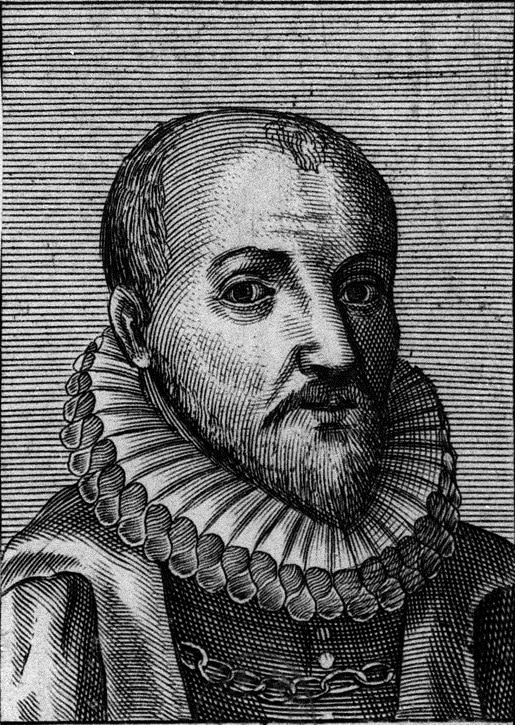
Montaigne was born in the Aquitaine region of France, on the family estate Château de Montaigne, in a town now called Saint-Michel-de-Montaigne, close to Bordeaux. The family was very wealthy; his great-grandfather, Ramon Felipe Eyquem, had made a fortune as a herring merchant and had bought the estate in 1477, thus becoming the Lord of Montaigne. His father, Pierre Eyquem, Seigneur of Montaigne, was a French Catholic soldier in Italy for a time and had also been the mayor of Bordeaux.
Around the year 1539, Montaigne was sent to study at a prestigious boarding school in Bordeaux, the Collège de Guyenne, then under the direction of the greatest Latin scholar of the era, George Buchanan. He then began his study of law at the University of Toulouse in 1546 and entered a career in the local legal system. He was a counselor of the Court des Aides of Périgueux and, in 1557, he was appointed counselor of the Parlement in Bordeaux (a high court). From 1561 to 1563 he was courtier at the court of Charles IX; he was present with the king at the siege of Rouen (1562). He was awarded the highest honour of the French nobility, the collar of the Order of St. Michael, something to which he aspired from his youth.
Montaigne wed Françoise de la Cassaigne in 1565. They had six daughters, but only the second-born survived childhood.
Montaigne started to work on the first translation of the Catalan monk Raymond Sebond's Theologia naturalis, which he published in 1568. After this, he inherited the family's estate, the Château de Montaigne, to which he moved back in 1570, thus becoming the Lord of Montaigne. Another literary accomplishment was Montaigne's posthumous edition of his friend Boétie's works
In 1571, he retired from public life to the Tower of the Château, his so-called "citadel", in the Dordogne, where he almost totally isolated himself from every social and family affair. Locked up in his library, which contained a collection of some 1,500 works, he began work on his Essais ("Essays"), first published in 1580. On the day of his 38th birthday, he entered this almost ten-year period of self-imposed reclusion.
While in the city of Lucca in 1581, he learned that he had been elected mayor of Bordeaux; he returned and served as mayor. He was re-elected in 1583 and served until 1585, again moderating between Catholics and Protestants. The plague broke out in Bordeaux toward the end of his second term in office, in 1585. In 1586, the plague and the Wars of Religion prompted him to leave his château for two years.
Montaigne continued to extend, revise, and oversee the publication of Essais. In 1588 he wrote its third book and also met the writer Marie de Gournay, who admired his work and later edited and published it.
Montaigne died of quinsy at the age of 59, in 1592 at the Château de Montaigne
He was buried nearby. Later his remains were moved to the church of Saint Antoine at Bordeaux. The church no longer exists: it became the Convent des Feuillants, which has also disappeared. The Bordeaux Tourist Office says that Montaigne is buried at the Musée Aquitaine, Faculté des Lettres, Université Bordeaux 3 Michel de Montaigne, Pessac.
(Adapted from Wikipedia, but the etching is by Freher, 1688)
___________________________________________________________________________________________________________________________
Around the year 1539, Montaigne was sent to study at a prestigious boarding school in Bordeaux, the Collège de Guyenne, then under the direction of the greatest Latin scholar of the era, George Buchanan. He then began his study of law at the University of Toulouse in 1546 and entered a career in the local legal system. He was a counselor of the Court des Aides of Périgueux and, in 1557, he was appointed counselor of the Parlement in Bordeaux (a high court). From 1561 to 1563 he was courtier at the court of Charles IX; he was present with the king at the siege of Rouen (1562). He was awarded the highest honour of the French nobility, the collar of the Order of St. Michael, something to which he aspired from his youth.
Montaigne wed Françoise de la Cassaigne in 1565. They had six daughters, but only the second-born survived childhood.
Montaigne started to work on the first translation of the Catalan monk Raymond Sebond's Theologia naturalis, which he published in 1568. After this, he inherited the family's estate, the Château de Montaigne, to which he moved back in 1570, thus becoming the Lord of Montaigne. Another literary accomplishment was Montaigne's posthumous edition of his friend Boétie's works
In 1571, he retired from public life to the Tower of the Château, his so-called "citadel", in the Dordogne, where he almost totally isolated himself from every social and family affair. Locked up in his library, which contained a collection of some 1,500 works, he began work on his Essais ("Essays"), first published in 1580. On the day of his 38th birthday, he entered this almost ten-year period of self-imposed reclusion.
While in the city of Lucca in 1581, he learned that he had been elected mayor of Bordeaux; he returned and served as mayor. He was re-elected in 1583 and served until 1585, again moderating between Catholics and Protestants. The plague broke out in Bordeaux toward the end of his second term in office, in 1585. In 1586, the plague and the Wars of Religion prompted him to leave his château for two years.
Montaigne continued to extend, revise, and oversee the publication of Essais. In 1588 he wrote its third book and also met the writer Marie de Gournay, who admired his work and later edited and published it.
Montaigne died of quinsy at the age of 59, in 1592 at the Château de Montaigne
He was buried nearby. Later his remains were moved to the church of Saint Antoine at Bordeaux. The church no longer exists: it became the Convent des Feuillants, which has also disappeared. The Bordeaux Tourist Office says that Montaigne is buried at the Musée Aquitaine, Faculté des Lettres, Université Bordeaux 3 Michel de Montaigne, Pessac.
(Adapted from Wikipedia, but the etching is by Freher, 1688)
___________________________________________________________________________________________________________________________
Katharine Margot Toohey
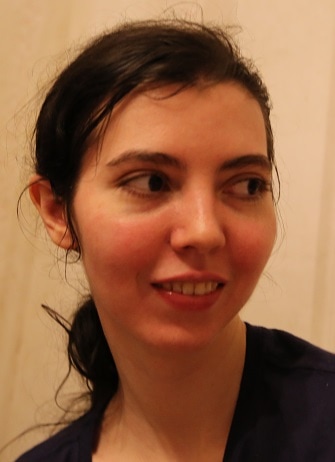
Katharine Margot Toohey graduated from Western Sydney University with a Bachelor of Arts With Distinction and the Dean's Medal for Academic Excellence. She majored in French and her special areas of study are Romance Languages, English Literature and Linguistics. She has a Postgraduate Distinction in Adolescent Development and Teaching. In 2017, she translated into English, published and photo-illustrated an edition of excerpts from Montaigne's Essais and the full Medieval French Chantefable, Aucassin et Nicolette. She translated and published Marie de France's Medieval French Romance, Gugemer, in 2018. In the same year, she published her paperback study of the Postwar Surrealist artist, Vera Rudner, the first book entirely about Rudner's work. She translated Marie de France's Romance Lanval from Medieval French in 2019. Also in 2019, she published Once She Had Escaped the Tower - a paperback combining her new translations of Aucassin and Nicolette, and Marie de France's Gugemer. She is currently translating Bernat Metge's Lo Sompni from early Catalan into English, Marie de France's Romance Guildeluec and Guilliadon (aka Eliduc) from Medieval French, and the historic love letters between Manuela Sáenz and Simón Bolívar (two great leaders of the South American Revolution) from nineteenth century South American Spanish.
In 2016, she founded Quemar Press, an independent online and paperback publishing house. She publishes, edits and writes introductions for Quemar Press titles. Quemar Press has now published 10 paperback titles, and 14 ebooks.
Among her other interests is photography, and her photographs have appeared on Quemar Press' website and in Quemar's publications, and have been used by Bloodaxe Books, The Australian Broadcasting Corporation, The Australian, The Griffin Poetry Prize, The Festival of Sydney, The Queensland Poetry Festival, Poetry International, Vagabond Press, Giramondo Publishing, Plumwood Mountain, and The Rose Scott Women's Writers' Festival.
___________________________________________________________________________________________________________________________
In 2016, she founded Quemar Press, an independent online and paperback publishing house. She publishes, edits and writes introductions for Quemar Press titles. Quemar Press has now published 10 paperback titles, and 14 ebooks.
Among her other interests is photography, and her photographs have appeared on Quemar Press' website and in Quemar's publications, and have been used by Bloodaxe Books, The Australian Broadcasting Corporation, The Australian, The Griffin Poetry Prize, The Festival of Sydney, The Queensland Poetry Festival, Poetry International, Vagabond Press, Giramondo Publishing, Plumwood Mountain, and The Rose Scott Women's Writers' Festival.
___________________________________________________________________________________________________________________________
Unknown Author/s of Aucassin and Nicolette
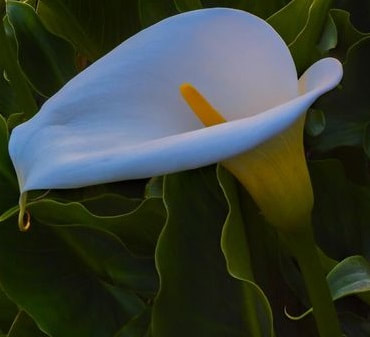
The only extant manuscript of the Medieval French Chantefable Aucassin and Nicolette was found in 1752. The author may have lived during the reign of Louis VII (1137-1180), rather than under that of Philipe-Auguste (1180-1223), because of the archaic tempo of the sections in verse and the assonances. On the other hand, the author could have lived in the 13th century, as these assonances still remained then. The mention of droit de lagan - right of a lord to maritime salvage in his domain - might date the text to before 1191, when that law was abolished, but the law was still practised after that. Most scholars assume a single author but there may be variations of tone and emphasis in the text which could indicate a combination of narrators or sources. Some of the diction suggests that the author was from Hainaut, or from a region east of Picardie. In light of contemporary literature by Marie de France, it might be possible to consider some female authorship. This idea may be supported by the focus on Nicolette, her circumstances and her psychology in the text.
__________________________________________________________________________________________________________________________________________
__________________________________________________________________________________________________________________________________________
Margaret Bennett

Margaret Bennett is a consultant to trauma organisations, managers and their staff. She is a social work clinician, academic and researcher, who brings a human rights perspective to helping the traumatised trauma worker. She has worked with trauma workers in Australia and the Asia-Pacific, and provided training and evaluation services in the UK, Europe, Nepal, Indonesia, Aceh, East Timor, New Zealand, Georgia (Russia) and Sri Lanka. She has worked in a wide range of trauma settings - torture and trauma (including ten years as Director of the first torture and trauma service in Australia - STARTTS, NSW Service for the Treatment and Rehabilitation of Torture and Trauma Survivors), refugee settings, rape and domestic violence services, cancer education and support, missing persons, and both generalist and veteran-specific mental health services. Margaret is the author of Thrive Beyond Traumas: a guide for trauma workers and their managers (Omne Publisher, 2015). She is a Churchill Fellow.
She collaborated with Jennifer Maiden (the former Writer in Residence at STARTTS) to create a workbook for Quemar Press, designed to help survivors of trauma or torture to write about their experiences. The workbook Workbook Questions: Writing of Torture, Trauma Experience was published by Quemar in 2019.
__________________________________________________________________________________________________________________________________________
She collaborated with Jennifer Maiden (the former Writer in Residence at STARTTS) to create a workbook for Quemar Press, designed to help survivors of trauma or torture to write about their experiences. The workbook Workbook Questions: Writing of Torture, Trauma Experience was published by Quemar in 2019.
__________________________________________________________________________________________________________________________________________
Manuela Sáenz
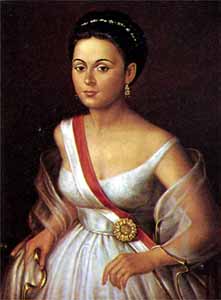
Manuela Sáenz Aizpuru was born in Quito in 1797. As a child, she learned at the 'Convento de las Monjas Conceptas (Real Monasterio de la Limpia e Inmaculada Concepción)', and at the house of her stepmother, who showed great affection for her and encouraged her enjoyment of reading. Sáenz learned Languages (English and French), embroidery and confectionery at the 'Monasterio de Santa Catalina de Siena (Quito), de la Orden de Santo Domingo' - knowledge she would later use to make an income after she was exiled.
Her father arranged her marriage to an older English doctor, James Thorne in 1817. Sáenz and Thorne moved to Lima (Peru) in 1819.
In the 1819 political climate, Simón Bolívar was active in New Granada's liberation, and, in 1820, Manuela Sáenz joined the covert political operations against Peru's viceroy, José de la Serna e Hinojosa.
The South American revolution surrounded her early life. In 1821, her half brother was an officer in the Numancia battalion, now part of the liberating army. In that year she travelled with him.
Sáenz became estranged from Thorne, and left in 1822 for Quito. That year, she became acquainted with Bolívar, as he officially took over Peru's liberation. They would meet often as the revolutionary campaigns travelled South America. They would also correspond, exchange love letters, practical military advice, and advice about practical survival.
In 1823, Bolívar, in his role as General, wished her to be part of his military staff. She agreed and became his archivist, journeying with him and the armies.
She rescued Bolívar in September 1828, intervening in an attempt on his life in Bogotá and giving him time to escape through a window. Afterwards, he would refer to her as 'the liberator's liberator'. He often remarked on her successes in subduing mutinies.
Her work was recognised by Peru when she was awarded the Order of the Sun.
Bolívar died when he was leaving Bogotá in 1830. Francisco de Paula Santander retook power and exiled Sáenz in 1834. She voyaged to Jamaica. Then she returned to Ecuador in 1835, but was unable to return to Quito as her passport was revoked by the President, Vicente Rocafuerte. She continued to the North of Peru, where she decided to live in Paita, on the coast. It has been reported that she lived with two women who were freed slaves from her stepmother's house, and with whom she had a close friendship from childhood. She interacted with other revolutionary figures, such as Garibaldi, and Simón Rodríguez (Bolívar's tutor and mentor), and supported herself financially by working as a translator, amanuensis, tobacco merchant, confectioner and embroiderer. She died from an infectious fever in November 1856. She had once written to Bolívar: 'usted bien sabe de mi presencia en cuerpo y alma a su lado ('you know well my presence in body and soul at your side').
In 2021, Quemar Press published Meeting Each Other Alive, our new English translations of letters that she and Bolívar exchanged, and of letters they wrote to others about each other.
__________________________________________________________________________________________________________________________________________
Her father arranged her marriage to an older English doctor, James Thorne in 1817. Sáenz and Thorne moved to Lima (Peru) in 1819.
In the 1819 political climate, Simón Bolívar was active in New Granada's liberation, and, in 1820, Manuela Sáenz joined the covert political operations against Peru's viceroy, José de la Serna e Hinojosa.
The South American revolution surrounded her early life. In 1821, her half brother was an officer in the Numancia battalion, now part of the liberating army. In that year she travelled with him.
Sáenz became estranged from Thorne, and left in 1822 for Quito. That year, she became acquainted with Bolívar, as he officially took over Peru's liberation. They would meet often as the revolutionary campaigns travelled South America. They would also correspond, exchange love letters, practical military advice, and advice about practical survival.
In 1823, Bolívar, in his role as General, wished her to be part of his military staff. She agreed and became his archivist, journeying with him and the armies.
She rescued Bolívar in September 1828, intervening in an attempt on his life in Bogotá and giving him time to escape through a window. Afterwards, he would refer to her as 'the liberator's liberator'. He often remarked on her successes in subduing mutinies.
Her work was recognised by Peru when she was awarded the Order of the Sun.
Bolívar died when he was leaving Bogotá in 1830. Francisco de Paula Santander retook power and exiled Sáenz in 1834. She voyaged to Jamaica. Then she returned to Ecuador in 1835, but was unable to return to Quito as her passport was revoked by the President, Vicente Rocafuerte. She continued to the North of Peru, where she decided to live in Paita, on the coast. It has been reported that she lived with two women who were freed slaves from her stepmother's house, and with whom she had a close friendship from childhood. She interacted with other revolutionary figures, such as Garibaldi, and Simón Rodríguez (Bolívar's tutor and mentor), and supported herself financially by working as a translator, amanuensis, tobacco merchant, confectioner and embroiderer. She died from an infectious fever in November 1856. She had once written to Bolívar: 'usted bien sabe de mi presencia en cuerpo y alma a su lado ('you know well my presence in body and soul at your side').
In 2021, Quemar Press published Meeting Each Other Alive, our new English translations of letters that she and Bolívar exchanged, and of letters they wrote to others about each other.
__________________________________________________________________________________________________________________________________________
Simón Bolívar
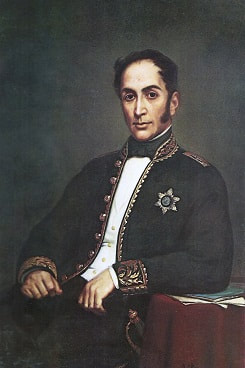
Simón Bolívar was born on the 24th July, 1783 in Caracas, Venezuela (what was then part of New Granada and is now Venezuela). As a young child, he learned 18th century liberal philosophy with Simón Rodríguez, a follower of Jean-Jacques Rousseau. Bolívar left to finish his studies in Europe when he was sixteen. He remained in Spain for three years, marrying a women whose father was Spanish nobility. He brought her home to Caracas, but she died of yellow fever within a year. Bolívar was guided by Rodríguez to read the works of Rationalist writers when in Paris, and is said to have been the most influenced by Montesquieu, Rousseau and Voltaire.
Returning to Venezuela, he took part in covert political revolutionary meetings. In April 1810, the Spanish governor was exiled. When a national congress drafted a constitution in Caracas in 1811, Bolívar gave his first public political speech, and joined the republic's army.
After an armistice left the country vulnerable to Spain, Bolívar published El manifiesto de Cartagena, in which he hoped that united revolutionary forces could remedy Spain's control. Bolívar regained Venezuela, entering Caracas on August 6 1813 after six battles. Now he had the support of New Granada patriots. Following a civil war, and defeat by the Spanish, Bolívar travelled to New Granada, and was commissioned to overthrow a group of separatists from Bogotá. He achieved that, but was unable to unite revolutionary forces in Cartagena and left for Jamaica. He wrote The Letter from Jamaica, highlighting his concepts of constitutional republics in Latin America and of a British-style government in the former Viceroyalty of New Granada, with a lower house to be elected, a hereditary upper house, and a life-term elected president.
When the United States and Great Britain would not send aid to the Revolutionary forces, Bolívar approached Haiti - which had liberated itself from French control. Haiti welcomed him and gave financial support and arms. Bolívar created headquarters in the region of Orinoco River in 1817, and created a great plan to overthrow the Viceroyalty of New Granada.
Not expecting Bolívar's forces to attempt a trek through flooded plains and an ascent into the Andes, a large part of the royalist army surrendered in the Battle of Boyacá on the 7th August, 1819. Bolívar was given the title of military dictator and president. The Republic of Colombia was created, encompassing the departments of New Granada (now Panama and Colombia), Quito (Ecuador), and Venezuela. Bolívar's country, Venezuela, was liberated in June 1821 with the Battle of Carabobo. Working in battle strategy with his officer, Antonio José de Sucre, Bolívar liberated Ecuador in May 1822. In Quito he became acquainted with Manuela Sáenz. They would meet as the revolutionary forces traversed South America, exchanging strategy and love letters. She became a member of his Military General Staff, and his Archivist.
With Peru and Upper Peru still under some Spanish control, Bolívar met with José de San Martín, the Argentine revolutionary, at their Guayaquil Conference in Ecuador. Here, Bolívar took over the effort to liberate Peru. Bolívar worked with Sucre, and created an army to counteract the unassailable Spanish position in the Peruvian mountains. The Spanish viceroy surrendered on December 9, 1824. Sucre liberated Upper Peru in April 1825.
Bolívar now had the title of president of Gran Colombia and dictator of Peru. The newly created country would be known as Bolivia. In light of his earlier ideas, Bolívar created a constitution with a three chamber legislative body and a life-term president. His wish to build a league of Hispanic American states led to a congress in Panama, envisaging a common navy and army, planning an assembly to represent the states, and with the idea of a situation in which states' controversies were remedied by arbitration.
A civil war began between New Granada and Venezuela. On September 25th, 1828, at the presidential palace, conspirators attempted to assassinate Bolívar. Manuela Sáenz intervened, warned him, and gave him an opportunity to escape by a window.
In 1829, Venezuela separated from Gran Colombia. Bolívar voyaged from Bogotá on the 8th of May, 1830. It is reported that he died of either tuberculosis or complications from an electrolyte imbalance in 1830. The title he wished for himself was 'Liberator', something he is said to have held higher than any regal honorific. He also wished it for Manuela Sáenz - his beloved companion and often his rescuer - addressing her as 'the Liberator's Liberator'.
In 2021, Quemar Press published Meeting Each Other Alive, our new English translations of letters that he and Sáenz exchanged, and of letters they wrote to others about each other.
Returning to Venezuela, he took part in covert political revolutionary meetings. In April 1810, the Spanish governor was exiled. When a national congress drafted a constitution in Caracas in 1811, Bolívar gave his first public political speech, and joined the republic's army.
After an armistice left the country vulnerable to Spain, Bolívar published El manifiesto de Cartagena, in which he hoped that united revolutionary forces could remedy Spain's control. Bolívar regained Venezuela, entering Caracas on August 6 1813 after six battles. Now he had the support of New Granada patriots. Following a civil war, and defeat by the Spanish, Bolívar travelled to New Granada, and was commissioned to overthrow a group of separatists from Bogotá. He achieved that, but was unable to unite revolutionary forces in Cartagena and left for Jamaica. He wrote The Letter from Jamaica, highlighting his concepts of constitutional republics in Latin America and of a British-style government in the former Viceroyalty of New Granada, with a lower house to be elected, a hereditary upper house, and a life-term elected president.
When the United States and Great Britain would not send aid to the Revolutionary forces, Bolívar approached Haiti - which had liberated itself from French control. Haiti welcomed him and gave financial support and arms. Bolívar created headquarters in the region of Orinoco River in 1817, and created a great plan to overthrow the Viceroyalty of New Granada.
Not expecting Bolívar's forces to attempt a trek through flooded plains and an ascent into the Andes, a large part of the royalist army surrendered in the Battle of Boyacá on the 7th August, 1819. Bolívar was given the title of military dictator and president. The Republic of Colombia was created, encompassing the departments of New Granada (now Panama and Colombia), Quito (Ecuador), and Venezuela. Bolívar's country, Venezuela, was liberated in June 1821 with the Battle of Carabobo. Working in battle strategy with his officer, Antonio José de Sucre, Bolívar liberated Ecuador in May 1822. In Quito he became acquainted with Manuela Sáenz. They would meet as the revolutionary forces traversed South America, exchanging strategy and love letters. She became a member of his Military General Staff, and his Archivist.
With Peru and Upper Peru still under some Spanish control, Bolívar met with José de San Martín, the Argentine revolutionary, at their Guayaquil Conference in Ecuador. Here, Bolívar took over the effort to liberate Peru. Bolívar worked with Sucre, and created an army to counteract the unassailable Spanish position in the Peruvian mountains. The Spanish viceroy surrendered on December 9, 1824. Sucre liberated Upper Peru in April 1825.
Bolívar now had the title of president of Gran Colombia and dictator of Peru. The newly created country would be known as Bolivia. In light of his earlier ideas, Bolívar created a constitution with a three chamber legislative body and a life-term president. His wish to build a league of Hispanic American states led to a congress in Panama, envisaging a common navy and army, planning an assembly to represent the states, and with the idea of a situation in which states' controversies were remedied by arbitration.
A civil war began between New Granada and Venezuela. On September 25th, 1828, at the presidential palace, conspirators attempted to assassinate Bolívar. Manuela Sáenz intervened, warned him, and gave him an opportunity to escape by a window.
In 1829, Venezuela separated from Gran Colombia. Bolívar voyaged from Bogotá on the 8th of May, 1830. It is reported that he died of either tuberculosis or complications from an electrolyte imbalance in 1830. The title he wished for himself was 'Liberator', something he is said to have held higher than any regal honorific. He also wished it for Manuela Sáenz - his beloved companion and often his rescuer - addressing her as 'the Liberator's Liberator'.
In 2021, Quemar Press published Meeting Each Other Alive, our new English translations of letters that he and Sáenz exchanged, and of letters they wrote to others about each other.
__________________________________________________________________________________________________________________________________________
